Showing posts with label reviews. Show all posts

20.11.11

"layered like a palimpsest": Review in 'The Other Side'


Library, 'The Other Side'
Reviewed by Jaya Jaitly

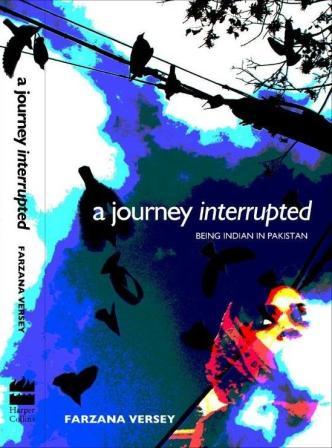
A Journey Interrupted
Being Indian in Pakistan
Farzana Versey
Harper Collins Publishers India 2008
Pages 279
Price Rs 295


Farzana Versey is a well-known, independent minded and rather spunky writer whose introverted public personality camouflages a healthy irreverence in her writings for many of the popularly acceptable norms of society. Her personal tale of many journeys to Pakistan as a proud Indian has not received the kind of publicity it is due. This is probably because she is not the wining and cheesing at a five-star hotel type. Publishers probably do not find her persona fitting the Page three book writer type either.

Despite having made a rather quiet entry onto the bookshelves at bookshops, and not being displayed in the show windows, this is one of the more genuine and perceptive books written on the layers of culture, society and history that make up Pakistan. The mannerisms of its people appear to be alien but we soon realize there are their counterparts in India. When seen through the eyes of an Indian they become instantly recognisable. At one point Farzana comments on a man she meets at a social occasion: “Fazal was a man on the make and Aijaz was a collector – a collector of contacts; he called them friends to legitimize his desperate need for networking”. The young show offs in drawing rooms and wedding entourages in so many cities of India are mirror images of these two Pakistani Punjabi men. It makes one give a further thought to Asif Zardari’s recent statement that there is a little bit of Indian in every Pakistani and a little bit of Pakistani in every Indian.

The author’s views and experiences change in nuance and understanding during her many journeys to Pakistan. They get layered like a palimpsest through which similarities and differences in textures are revealed. She probes with her curious mind the simplest of gestures and mannerisms and tells herself, more than the reader, of how it is to be an Indian visiting Pakistan. She asks, “Is there a place for secularism in an Islamic society? Or Atheism? Atheism remains the invisible minority: they have no heritage to uphold. No blasphemy laws apply to them. Non-belief is a private wound that you nurse quietly”. In a form of anwer, she shares a note she received from a Pakistani before she even went there:

When I was a child I used to think a lot about God and admired his power and grandeur. Then I thought I should find out whether this guy exists or it’s a hoax. I did it this way. I decided to talk to God, and I said “ I will call you an s.o.b. If you respond, then you exist and if you don’t then you don’t , then I am your creator and not the other way round, and if you hurt me for calling you an s.o.b., then you are an s.o.b. and not God” . Nothing happened. I therefore concluded that he did not exist or I left him with no choice but to remain silent”.

Written with a light touch, but with deep thoughtfulness, this book is one of those that stand out because the writer is both natural, sincere, and does not fear to be what she is.

- - -

Jaya Jaitly is editor of 'The Other Side', a socialist journal, and has been working for the revival of Indian crafts. She is the innovator of Dilli Haat and the former president of the Samata Party.

- - -

This review appeared in an issue in 2008, but I discovered about it only a couple of months ago!

A piece on writing about travel is on 'Cross Connections'

---

Stepping Across the Line
Shobhana Bhattacharji
The Book Review Literary Trust
VOLUME XXXII NUMBER 10 October 2008

A Journey Interrupted is a secular version of nineteenth-century Indian women’s hajj narratives in which their sense of their Indian identity became stronger and stronger as their pilgrimages proceeded.1 At its simplest, A Journey Interrupted is about a Bombay-based Muslim woman journalist’s trips to Pakistan between 2001 and 2007. She visited and revisited Karachi, Islamabad, and Peshawar; she spoke to friends, politicians, army officers, socialites, poets, prostitutes, chai-wallahs, taxi-drivers, and others; she initiated conversations and had them thrust upon her; she experienced the legendary Pakistani hospitality and hostility; equally, her travelling to Pakistan was derided by friends and acquaintances in India. Summed up like this, we have another cliché, which it is not.

It is the first time I have read about feelings, ideas, and attitudes which must be part of the emotional and conversational furniture in Muslim homes but which the rest of us are not usually privileged to share. Being Muslim in India is tough enough in the normal course, with Muslims having to constantly prove their loyalty to India. It is complicated by their having close family in both countries. (This is true of other minorities like Christians as well, but that story is yet to be narrated, the dominant post-partition story being occupied by the two major affected religious groups, Hindus and Muslims.)

Versey writes as a second generation Indian affected by partition, one like me who grew up in India but among parents who knew undivided India. In the early years of this century, Asma Jehangir used to say with passion that unless our generation worked for peace between the two countries, there was no hope. Our generation, even those of us who are midnight’s children born after partition, feel we have lived in undivided India because we share our parents’ memories. But history has changed later generations.

To paraphrase Versey, they are bombarded with new weapons of hate and do not have the tolerance of the older generation who, she says, felt we should try and forget what happened and get on with life. They do not have the partial understanding but strong desire of some of our generation that we can at least cooperate and live in peace. This sounds like some more been-there-done-that.

The new thing about this book is that its rather impressionistic and sometimes dateless-diary mode is held in the strong clasp of a preface.

--

 (Review updated on blog in Aug 2015)

1.8.11

"The narrator drew me into her world": A new review at Amazon

Amazon 
July 17, 2011 
By Keiko Amano


It took three weeks to receive this book, but it was worth it. I was very excited to read and finished the book. I truly enjoyed it.

Through the scenes and narrative, I felt closer to the characters and situations although I didn't even know any of the Pakistani writers or other well-known people in India and Pakistan. But, all the more, the narrator drew me into her world. This reading was truly special to me. Out of all the elements, politic, religion, history, travels, and personal accounts, I trusted the narrator's wisdoms and sensitivity in language.

From this book, I learned many facts. First, I knew many Muslim people live in India, but I didn't know more Muslims in India than in all of Pakistan. I thought most of the people I know probably didn't know that. And I was even more surprised to find that 3 millions Hindu people live in Pakistan. I thought to myself, "What a simplistic imagination I used to have!" Second, Goa, India, was occupied by Portuguese until 1961. That wasn't too long ago.

About the terms the narrator used, I thought them interesting, such as atheist Muslim or secular government because I thought governments are to operate independently away from religion. Obviously, I've been taking this kind of things for granted because I'm Japanese. So, reading this book, I started to understand the needs of such terms even though I understood the narrator was against labeling. It made me think.

About Urdu, I enjoyed reading dialogues. Even though I don't know the language at all, I read each dialogue with much interest. I appreciated the narrator's deep knowledge of the language and culture.

About honesty, the author/narrator's voice seeped through, and I just loved when her honesty spilled humor. It was like Flannery O'Connor, my favorite American author. The narrator made me chuckle more than a dozen times, but I would give just two examples. On her first visit to Pakistan and about to be deported, her Pakistani driver says, "When you return home you can at least tell people you saw the best sight in Karachi." Haven't we all had such experience? Then, the narrator says, "I did not know what I had `seen' since my back was turned to it." I imagined the seriousness of her situation, a famous ancient site in Pakistan, and the driver's concern for tourists, I started to giggle reading late at night. Second example, a fortune teller said to the narrator, "Men will cause you troubles." She said, "You could tell this to any woman in any part of the world and she would agree." Ha ha. I couldn't agree more!

I learned a lot from this book and very satisfied with it.

3.11.08

Review in Swagat

This is a review that has appeared in the November 2008 issue of Swagat, which is the inflight magazine of Indian Airlines. Their website says it is read by 2 million upmarket passengers every month. But they will still read Paulo Coelho da jawaab nahin!

As with all reviews, I shall not comment, except to clarify that nowhere have I mentioned that Aga Khanis are a persecuted lot in Pakistan.


28.9.08

Review in Deccan Herald

Negotiating for an identity
Deccan Herald


What begins as an exciting concept soon descends into confused dialogues and reflections. A Journey Interrupted becomes an opportunity interrupted. Farzana Versey embarks on a unique journey, as an Indian in Pakistan. But what makes her journey unique is that she is not only Indian, but an Indian Muslim and so, much information not easily accessible to many Indians becomes accessible to her. She takes the reader with her to Karachi, Islamabad, Lahore, Peshawar and many other interesting and unique places, some known, others little known places.

The book tries to give as complete a slice of Pakistani society as possible, without any obfuscation no matter how disconcerting the narrative and introduces an array of interesting personalities. So when the Karachi teenagers tire of pornographic sites, they ‘visit Indian sites. There are fights about Indo-Pak issues...and Kashmir is top in the list; then we discuss films, cities and politics.’ UK-based Sikh Satwinder, is rebuilding his father’s lost-in-partition empire in Lahore, ‘...his way of hitting out, telling Lahore that he is rebuilding his father’s life’; Shujat, wants to have an affair with ‘Not just an Indian woman, but a Brahmin one’, which would not be ‘about love, but hate...like war’; Tariq thinks ‘..the Hindu is a stigma for Muslims, anyway, they are definitely not seen as the same as us’.

Against them is juxtaposed Jeremy, the Christian, who does not care that he cannot discuss Christianity in social gatherings like Islam is discussed, so long as ‘I am allowed my drinks, I carry my name and I go to church...’, Nihal, who wants a break in Bollywood for ‘Bollywood is the place to be, even our established actors want to make it there.’

Khalid Ahmed, in charge of the ‘Beyond Borders’ concept in Pakistan, who, born in Patna came to Pakistan as an adult and carries all these — ‘a Bihari identity, an Indian identity and a Pakistani identity’. Sheema Kerwani ‘dances in a society where she is not permitted to, to the strains of Indian music in a form that was created as a celebration of Hindu gods. But for her Lord Krishna is not just a clay idol, but a vision of love...’. For Ardeshir Cowasjee, ‘a motherland is a motherland. If I am asked where I was born, I would say India. In 1929, this was India’. And Parvez Hoodbhoy, who rejects that there is a Pakistani culture and sees a ‘deliberate attempt to ‘Saudi-ise’ it, as opposed to accepting a South-Asian identity’.

The academician, the harlot, the delinquent juvenile mystic, the rich Sindhi Hindu, the gay, the lesbian, the Afghan refugee, the poet, the civil rights activist — all are touched upon.

There are some beautiful imagery and moments of reflection. And the author’s own journey through her many fractured identities — as a woman, an Indian, a Muslim, a Muslim in India, an Indian Muslim in Pakistan — ‘the emotional mulatto. The fence sitter who could not make up her mind. But when did I have a choice?’

The style at times is reminiscent of M J Akbar, but unfortunately the author is unable to sustain it and the reader’s interest. So it becomes an endless series of interviews culminating into analysis often defensive and judgmental. The incessant questions, the disjointed narratives and the constant refrain of the Babri Masjid demolition combine to dull the reading. There are also some sweeping and simplistic generalisations: ‘Unlike in Mumbai...in Pakistan a Parsi can at least die with his faith intact’, 'This was how the Hindu mind, the urban, western-educated mind was thinking’, and a sorry apologist argument about the blowing up of the Bamiyan Buddhas.

The ending is poignant; witnessing the ‘Beating the Retreat’ at the Wagah border on the Pakistani side, the author bursts into tears when she hears the voice of Lata Mangeshkar from the Indian side against the Pakistani backdrop of Allahu Akbar. “I could not explain. Allah-u-Akbar and Lata Mangeshkar are both embedded deep in my consciousness. Both are part of my personal history.” These lines convey the message that the rest of the book struggles to. All the challenges, the contradictions, the anger, the pain and smugness of being a Muslim in India come gushing forth. So while A Journey Interrupted leaves one with insightful vignettes of Pakistan, its tortuous tryst with its identity-based destiny, the book is also about the author’s attempt to negotiate her own identity.

27.8.08

Readers' expressions

As I said elsewhere, even before the formal launch, readers’ letters had started trickling in. Readers I did not know, have never met. A couple have visited my blog; the rest had to ‘search’ me. This makes it all the more touching.

The book has got fairly interesting reviews. But this – from people buying a copy, going through it, specifying page numbers and even a typo…I only know that if you touch people and reach out to them, then you have lodged yourself in their memories, their emotions, their conflicts. It could be ordinary things or deeper ones.

Here are a few excerpts from the notes, and one from a blog (Locations of the writers are Jaipur, Hyderabad, UP, UAE, Canada, USA in no particular order):

* * *

Dear Ms Versey,

I have recently gone through 'A Journey Interrupted', here in Jaipur. I do hope you will not mind my making a couple of critical observations regarding the work.

Reading it was all about trying to decipher your reflections, in parts at least. They came across as opaque to the average reader. Your style reminds one of the style of Naipaul--the actions and utterances of unconnected individuals are employed to generalise or illustrate the ambience. I think that is not an adequate basis to analyse a people or a country's mood in its generality. You do not introduce us to the Baluchi angst. I wonder whether a Baluch at all considers himself as having a 'Pakistani' identity!

* * *

I loved the book, Its nice. Starts of soft... vanilla types, engrossing.... but gets serious and captivating towards the latter part. The transformation is invisible, the sublime move from soft to serious is artistically superior. simply put... well placed, well edited.

Every word is worth being read. This book is basically meant for anybody wanting to know of Pak, Its culture, heritage, lifestyle, politics et al.

To be frank; My expectations from the book were much more, I expected hard realities, more space devoted to politics and terrorism with an intense FV touch.

I got the FV touch in a few places like, tears streaming down your cheeks... liftman etc (xii). Then again, We embraced like long-lost sisters (128), I uncovered my head and threw my arms... (277)…

My expectations from this book were, that you propel yourself from an anti-establishment columnist to an Indo-Pak expert, joining the likes of Linda Heard, Patrick Seale who are Middle-Eastern experts.

This is your first book, I am sure when we talk about it after another book of yours by then you will be an Indo-Pak expert and that will be the time when the entire world will be looking at India.

* * *

Sound like Indian psychops propaganda. Pakistan an amputation? Sounds like Mohandas Gandhi. United India was an imperial project. There were close to 500 principalities and states, all brutally annexed under the gun by Patel and his gang. His heritage continues in Gujarat where Muslims are burnt alive So glad about that 'amputation.'.India was never one country. Now India is a political entity ruled from Delhi. It is as if Germany were to declare itself Europe. Let us stay with Bharat.

Please don't give us concocted Congressite Islam. Pleasee...

* * *

At the beginning, I was not liking it much, though I found it extremely readable. I then felt you were deliberately trying to paint a dark picture of a country to which you went with a prior text. But as I crossed the half way barrier - until then I was rather uncomfortable - I began feeling dragged into it forcefully. And it was sheer delight all the way to the end and the end was so very apt and thoughtful.

The picture of the author that emerged from the pages is indeed fascinating, or must I say intriguing. And the identity pangs that you revealed are quite familiar turf for me. These are stray thoughts I am penning down soon after finishing the book. It is a fine narrative, very readable, and it touches upon some of the interesting aspects of a society on the brink of fragmentation.

I remain intrigued by the persona of the author now more than before, because she defies to be pigeon-holed into categories.

* * *

Hi Farzana,

I am sure you have a lot of people giving you warranted and unwarranted critiques of your work. And so here goes another unsolicited one. I started out reading three books at the same time. I finished yours first, because the more I read it, the more I felt absorbed and intrigued by your reasoning and mind flow.

When I read your book, I get the impression that the two solitudes (Hindu and Muslim) cannot and should not meet in an idealized and cooked up manner or fashion. It would be forced. That any "peacenik" notions are a fantasy and a deeper understanding of the cultural ethos of the two "nations" (I am not yet talking about Pakistan, just the two nations within India) is necessary before the external trappings of peace and harmony are implemented or attempted.

When I left India, I left with the understanding that Muslims and Hindus and other religions must develop class bonds and it is class affiliation that would determine the peaceful understanding between the two communities. When I went abroad, I started meeting Pakistanis for the first time. Every Pakistani I met suggested that they were like "us". Hinduism gives you a feeling of idolatry and Muslims seemed so much more dignified. I met and got friendly with different hues of Pakistanis. Exiled left wingers and working class.

The Manto segment was brilliant. He is like Lenny Bruce. I love him. Toba Tek Singh is awesome. I have never met a Saqlain…but I know of them. I have been going over your book a few times. I am distressed somewhere, which makes me pick it up again. I don't believe in text book peace. I still feel the raison détre for Pakistan has become

India-hating and insular and having been manipulated by both the Wahabi Saudis and the Old US imperial shenanigans, Pakistan has very little unifying force, other than enmity towards India. Pakistan is torn apart by tribal sensibilities, foreign Islamic influences, backward feudal macho cultural traits and a generally non-industrial

folklore. Not helpful.

I found your style refreshingly different, very streaming and great to read—and disturbingly switching in and out…but I realized that it was written with a hundred emotions flowing all together and so I understand it. It is sometimes like a net-discourse. Besides I am very big on creating a new language for ourselves" if we can.

* * *

Her journeys are reflective of the changing geopolitical landscape with the 9/11, NATO in Afghanistan, Kashmir, Gujarat, Karachi, Lal Masjid and many other incidents impacting the period of her reportage. Against this fast-changing backdrop, she grapples with the conflicts between societies, politics, nationalities, religions and genders; these conflicts play out in her interactions across a wide section of society on a “foreign” land. She meets their cultural icons and ventures out into other unexplored nooks and corners of that “land of the pure”– gays, junkies and other minorities and even artists, as they jostle for space on the periphery of the society.

…The author is brutally honest and disarmingly frank in dealing with her often conflicting anxieties tugging her in different directions. It is disconcerting, many a times surprising, and at times even shocking as she bares her inner emotions and relates them to her experiences. All this while, there is an implicit attempt to clean the cobwebs of confusion in her minds. Despite chartering such a wide territory during a tumultuous period, most of the questions she raises and others ask of her remain unanswered at the end of the book. Probably, it is unwise to seek destinations when only the journey and the exploration en route matters.

In any case, the author is a rebel, a non-conformist, a maverick, essentially a recusant, an intellectual beatnik, an iconoclast– all rolled into one. She is equally scathing on the right-wing Hindu fundamentalists, as she is on the Mullahs, or on the US imperialism and even tougher on the Wagah candle-lighting peaceniks. Her clash of identities- of religion, culture, gender and nationality- makes for a potent concoction when blended with her independent take on all issues.


26.8.08

M.V.Kamath on A Journey Interrupted

Just as writers do, reviewers too come with their own baggages.

Here we are not talking about just any reviewer; it is M.V. Kamath, stalwart, who covered World War II, the Partition, the Emergency, the Bangladesh War and has met the topmost leaders, written several books.

Interesting...this appeared in the August 24 issue of The Free Press Journal...


25.6.08

Snippets from a few reviews


Crossing the divide
India Today


It’s a troubling journey into a complex society trapped between western liberalism and radical Islam, where distortions about India and Indian Muslims dominate most conversations.

Despite its imperfections—a jerky, disjointed narrative and long passages of recorded history—this is an interesting book, made so by the searching questions she asks her protagonists and gets asked in return.

It reads like a heated debate, on theology, diplomacy, perceptions, the Muslim identity and radicalism, democracy and dictatorship and cultural cross currents.

Versey terms the CBMs as “designer peace” and concludes that real peace will never come: being anti-Indian is a crucial component of the Pakistan identity despite their obsession with Bollywood films and Indian television soaps.

She writes with anguish and pessimism, a journey into hearts of darkness with no light at the end of that distorted prism, mainly because as she astutely observes, “every few years Pakistan writes a new fiction” to keep the embers alive.


An Indian Muslim in Pakistan
DNA

The trouble with A Journey Interrupted is that it is a difficult book to get through, largely because of the writer’s tendency to lapse into florid description. Pakistani dancer Sheema Kirmani, for instance, enters the pages “like a story waiting to be told.” Her exit is equally dramatic: “I left her alone. Her eyes flashed embers.” This is pretty much the tone for most of the book, and while it makes for good drama, it is exhausting to read at length, and makes the characters seem less real.

Versey is much better when she leavens all that intensity with some humour, as when she describes a TV actress repeatedly muffing her one-line dialogue (‘Nahin!’). Her reflections on the complex relationship between Indian Muslims and Pakistan and the questions her travels raised about her own faith and feelings for her country are interesting and almost painfully honest.


Across the divide
The Mail Today

WHAT makes an Indian woman undertake four trips to Pakistan in a span of six years? No, it wasn’t with a book in mind — Farzana Versey, the author of A Journey Interrupted, Being Indian In Pakistan , clarifies that at the outset. It also wasn’t “… to find herself,” as someone at a well- heeled party in Mumbai quipped when Versey was away in Pakistan. It’s only when one grows with the book does one realise that the trips could not be summed up in a single- line answer. The visits contained too much and revealed too much, both about India and Pakistan, to be summed up as a definite answer.

As you start with Versey on her quaint trips across the Radcliffe Line, you realise that Pakistan may be just next door, but it is one of the longest distances that an Indian can travel in a lifetime. The journey, once begun, becomes yours. And as an Indian reader, you also start realising what is India — after all, it’s only when our country is juxtaposed with Pakistan that we realise what makes us ‘ us’ and them, well, ‘ them.’

Versey recounts experiences of each of her trips with vivid details and they are enmeshed with vignettes about Pakistan, both from immediate past and even remote past. So, as you read along, you realise that you are peeling off layers from the present day face of the country and gradually understanding how its past since August 14, 1947 has shaped up its present. It may be old wine in new bottle for Pakistan observers who are as old as the two neighbours of the subcontinent, or maybe even older, but for those who came in too late to be affected fatally by the events of 1947, 1965 and even 1971, it is definitely an interesting read. For instance, in two pithy pages, she sums up the transformation of Zulfikar Ali Bhutto from being the man, “… who asked Yahya to arrest Mujib ( ur- Rehman, in East Pakistan). It was a matter of time, before he became the leader.” She ends the run on the topic with Zia- ul- Haq taking charge of the country and Bhutto being sentenced to death by a Lahore court. She writes, “ As the noose went around his neck and the world stood shaken, Brutus transformed into Caesar.”

Sahara Times