3.9.08
Now available in Pakistan
To anyone who is interested, Liberty Books in most Pakistani cities will have my book or get it for you. Also can be purchased at their website


27.8.08
Listen to me read...
Two podcast extracts. Click download to listen:
(From http://www.ideajugglers.com/)

Podcast of Farzana Versey’s book, A Journey Interrupted, and Sec Walking by My Morning Jacket.
(From http://www.ideajugglers.com/)
Readers' expressions
As I said elsewhere, even before the formal launch, readers’ letters had started trickling in. Readers I did not know, have never met. A couple have visited my blog; the rest had to ‘search’ me. This makes it all the more touching.
The book has got fairly interesting reviews. But this – from people buying a copy, going through it, specifying page numbers and even a typo…I only know that if you touch people and reach out to them, then you have lodged yourself in their memories, their emotions, their conflicts. It could be ordinary things or deeper ones.
Here are a few excerpts from the notes, and one from a blog (Locations of the writers are Jaipur, Hyderabad, UP, UAE, Canada, USA in no particular order):
* * *
Dear Ms Versey,
I have recently gone through 'A Journey Interrupted', here in Jaipur. I do hope you will not mind my making a couple of critical observations regarding the work.
Reading it was all about trying to decipher your reflections, in parts at least. They came across as opaque to the average reader. Your style reminds one of the style of Naipaul--the actions and utterances of unconnected individuals are employed to generalise or illustrate the ambience. I think that is not an adequate basis to analyse a people or a country's mood in its generality. You do not introduce us to the Baluchi angst. I wonder whether a Baluch at all considers himself as having a 'Pakistani' identity!
* * *
I loved the book, Its nice. Starts of soft... vanilla types, engrossing.... but gets serious and captivating towards the latter part. The transformation is invisible, the sublime move from soft to serious is artistically superior. simply put... well placed, well edited.
Every word is worth being read. This book is basically meant for anybody wanting to know of Pak, Its culture, heritage, lifestyle, politics et al.
To be frank; My expectations from the book were much more, I expected hard realities, more space devoted to politics and terrorism with an intense FV touch.
I got the FV touch in a few places like, tears streaming down your cheeks... liftman etc (xii). Then again, We embraced like long-lost sisters (128), I uncovered my head and threw my arms... (277)…
My expectations from this book were, that you propel yourself from an anti-establishment columnist to an Indo-Pak expert, joining the likes of Linda Heard, Patrick Seale who are Middle-Eastern experts.
This is your first book, I am sure when we talk about it after another book of yours by then you will be an Indo-Pak expert and that will be the time when the entire world will be looking at India.
* * *
Sound like Indian psychops propaganda. Pakistan an amputation? Sounds like Mohandas Gandhi. United India was an imperial project. There were close to 500 principalities and states, all brutally annexed under the gun by Patel and his gang. His heritage continues in Gujarat where Muslims are burnt alive So glad about that 'amputation.'.India was never one country. Now India is a political entity ruled from Delhi. It is as if Germany were to declare itself Europe. Let us stay with Bharat.
Please don't give us concocted Congressite Islam. Pleasee...
* * *
At the beginning, I was not liking it much, though I found it extremely readable. I then felt you were deliberately trying to paint a dark picture of a country to which you went with a prior text. But as I crossed the half way barrier - until then I was rather uncomfortable - I began feeling dragged into it forcefully. And it was sheer delight all the way to the end and the end was so very apt and thoughtful.
The picture of the author that emerged from the pages is indeed fascinating, or must I say intriguing. And the identity pangs that you revealed are quite familiar turf for me. These are stray thoughts I am penning down soon after finishing the book. It is a fine narrative, very readable, and it touches upon some of the interesting aspects of a society on the brink of fragmentation.
I remain intrigued by the persona of the author now more than before, because she defies to be pigeon-holed into categories.
* * *
Hi Farzana,
I am sure you have a lot of people giving you warranted and unwarranted critiques of your work. And so here goes another unsolicited one. I started out reading three books at the same time. I finished yours first, because the more I read it, the more I felt absorbed and intrigued by your reasoning and mind flow.
When I read your book, I get the impression that the two solitudes (Hindu and Muslim) cannot and should not meet in an idealized and cooked up manner or fashion. It would be forced. That any "peacenik" notions are a fantasy and a deeper understanding of the cultural ethos of the two "nations" (I am not yet talking about Pakistan, just the two nations within India) is necessary before the external trappings of peace and harmony are implemented or attempted.
When I left India, I left with the understanding that Muslims and Hindus and other religions must develop class bonds and it is class affiliation that would determine the peaceful understanding between the two communities. When I went abroad, I started meeting Pakistanis for the first time. Every Pakistani I met suggested that they were like "us". Hinduism gives you a feeling of idolatry and Muslims seemed so much more dignified. I met and got friendly with different hues of Pakistanis. Exiled left wingers and working class.
The Manto segment was brilliant. He is like Lenny Bruce. I love him. Toba Tek Singh is awesome. I have never met a Saqlain…but I know of them. I have been going over your book a few times. I am distressed somewhere, which makes me pick it up again. I don't believe in text book peace. I still feel the raison détre for Pakistan has become
India-hating and insular and having been manipulated by both the Wahabi Saudis and the Old US imperial shenanigans, Pakistan has very little unifying force, other than enmity towards India. Pakistan is torn apart by tribal sensibilities, foreign Islamic influences, backward feudal macho cultural traits and a generally non-industrial
folklore. Not helpful.
I found your style refreshingly different, very streaming and great to read—and disturbingly switching in and out…but I realized that it was written with a hundred emotions flowing all together and so I understand it. It is sometimes like a net-discourse. Besides I am very big on creating a new language for ourselves" if we can.
* * *
Her journeys are reflective of the changing geopolitical landscape with the 9/11, NATO in Afghanistan, Kashmir, Gujarat, Karachi, Lal Masjid and many other incidents impacting the period of her reportage. Against this fast-changing backdrop, she grapples with the conflicts between societies, politics, nationalities, religions and genders; these conflicts play out in her interactions across a wide section of society on a “foreign” land. She meets their cultural icons and ventures out into other unexplored nooks and corners of that “land of the pure”– gays, junkies and other minorities and even artists, as they jostle for space on the periphery of the society.
…The author is brutally honest and disarmingly frank in dealing with her often conflicting anxieties tugging her in different directions. It is disconcerting, many a times surprising, and at times even shocking as she bares her inner emotions and relates them to her experiences. All this while, there is an implicit attempt to clean the cobwebs of confusion in her minds. Despite chartering such a wide territory during a tumultuous period, most of the questions she raises and others ask of her remain unanswered at the end of the book. Probably, it is unwise to seek destinations when only the journey and the exploration en route matters.
In any case, the author is a rebel, a non-conformist, a maverick, essentially a recusant, an intellectual beatnik, an iconoclast– all rolled into one. She is equally scathing on the right-wing Hindu fundamentalists, as she is on the Mullahs, or on the US imperialism and even tougher on the Wagah candle-lighting peaceniks. Her clash of identities- of religion, culture, gender and nationality- makes for a potent concoction when blended with her independent take on all issues.
26.8.08
M.V.Kamath on A Journey Interrupted
Just as writers do, reviewers too come with their own baggages.
Here we are not talking about just any reviewer; it is M.V. Kamath, stalwart, who covered World War II, the Partition, the Emergency, the Bangladesh War and has met the topmost leaders, written several books.
Interesting...this appeared in the August 24 issue of The Free Press Journal...

Here we are not talking about just any reviewer; it is M.V. Kamath, stalwart, who covered World War II, the Partition, the Emergency, the Bangladesh War and has met the topmost leaders, written several books.
Interesting...this appeared in the August 24 issue of The Free Press Journal...

6.7.08
In search of an identity - Interview with FV
The News, Pakistan
July 6
Peshawar was the only big city in Pakistan where my religion was of no consequence
By Murtaza Shibli
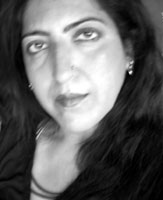
After more than two decades in newspaper and magazine writing, and more than 2,000 articles to her credit, Farzana Versey still cannot be categorised as a journalist -- she makes even outside events seem like her own, as she did in her recent book, entitled A Journey Interrupted: Being Indian in Pakistan. She has written columns and features for many publications, such as The Asian Age, Illustrated Weekly of India, Times of India, Sunday Observer, Gentleman, Deccan Chronicle and CounterPunch, but then she has also taught the visually-impaired, worked among the children in red-light areas, and as she says, "these have given me a sense of loss as well as hope."
It is evident that Farzana Versey enjoys interacting with people. She has interviewed several well-known personalities from politics, arts, literature, academia and the underworld. She is currently working on the biography of former Indian Prime Minister VP Singh. Most of her articles deal with contemporary political issues of the Indian subcontinent, communalism, gender, culture, society and the media. She makes no secret of her clear-cut views on issues and sometimes her self-professed "healthy disregard for objectivity" generates a lot of heated criticism. Accordingly, she tends to bring out extremes in both fan loyalty as well as adverse criticism, including abusive feedback and threats.
To leaven the straightforwardness of her political writings, Farzana Versey pens poetry. In her own words, "Words are my weapons, they are also my shield. They are a blessing and they are a curse." Open about herself, many of Farzana Versey's writings have an autobiographical element, including her travels. The News on Sunday interviewed her recently. Excerpts follow:
The News on Sunday: You recently visited Pakistan for the fourth time in the last six years and now a book on the county. Why Pakistan?
Farzana Versey: A more appropriate question would be why not Pakistan for all these years and why now? I have spoken about the fear of visiting that country and being stuck there in the event of a war. That fear remained. In some ways, the first trip was to purge that fear; the subsequent visits were to understand the hurt of the statement I begin my Prologue with when the retired army general said, "You need to be deported." I sensed a deep resentment in his voice and tone. Moreover, it was directed not against India, but against the Indian Muslim. He was hitting out at my identity.
TNS: The subcontinent's partition is prominently placed in your discourse. Is it still that relevant?
FV: I would say the partition resonating in my book A Journey Interrupted: Being Indian in Pakistan is more psychological. I have compared the attitude of the pre-partition generation, which has now taken on a soft-focus, let us forget it all and get over it attitude, with that of our generation and, more importantly, the younger generation. We are, as I wrote, living contemporary history. The youth is finding absolutely no connection with us. The geographical partition, however gruesome it was, at least had the advantage of bloodshed. The suspicion the Indian Muslim faces both at home and in Pakistan is without this benefit of catharsis. The fissures are only being fossilised with every stereotype.
TNS: Can the ongoing peace process between the two countries heal the wounds?
FV: As I have already said, we are not talking about those old wounds as much as about the new arrows being aimed blindly from both sides. Political peace is impossible and will never happen. I am afraid if this is a pessimistic view. I would call it freedom from delusion. It would suffice if the ordinary people kept up a semblance of civility and left politicians out of the peace process. When you want to sup with your neighbour you do not seek the permission of the landlord, do you?
TNS: Was it possible to do a book without Kashmir in it?
FV: I tried, but Kashmir was like a shadow tailing me. The reason is simple: the Pakistani interest in India is centred on Kashmir. Not the Kashmiri people, mind you, but Kashmir as real estate, as a brownie point. And this will continue to be a hotbed, because the most important thing is that this one state keeps the armies of both countries occupied. It has probably become a symbol to judge how patriotic one is.
TNS: Why did you choose Indian Muslim identity to set the narrative?
FV: Because it happens to be my identity. And this book is about the identity question in large measure -- my identity, the Pakistani identities. You forgot to add the 'woman' identity too. This was crucial because a female perspective put me in the real conflict with the terrain. Given that Pakistani society is considered misogynistic, I got to see it in action in my encounters with men from different strata. I do not think a man would ever write about Peshawar the way it has been written and I do believe I have shown the women of the Frontier as I saw them without wearing blinkers. If I saw an amazingly courageous rebel in a village here, I saw the complete helplessness of the so-called liberated woman in a big city too. There cannot be fixed ideas. Incidentally, Peshawar was the only big city in Pakistan where my religion was of no consequence.
TNS: Despite placing your Muslim identity at core, why are you seen as an infidel?
FV: This must be seen in the context of my various fractured selves that came along as baggage. I do tend to travel heavy! I referred to feeling like an emotional mulatto in the land of the pure where my supposed impurity hit me. This personal aspect was to take off on other marginals.
TNS: You are using a limited set of people to comment on the society. How exhaustive can this be?
FV: I am not a bird, so there was no sense in giving a bird's eye-view. I had not set out to write the definitive book on the Pakistani society, with a title that had every word in caps and footnotes that ran into pages. Interestingly, while researching some aspects it would take me to many of my earlier articles, so a bibliography would have ended up as an exercise in vanity that I can ill-afford beyond a point.
To answer your question, it may not be exhaustive, which is why it is not exhausting. However, it is most certainly relevant because those people are an intrinsic part of the country; they are its voices. Mores and norms are formed by lived experiences, not pontification.
A Bengali Muslim talking about Bangladesh makes more sense to me than my quoting ten experts. That information is available from any search engine. And will anyone be able to replicate the sheer anguish of people's personal lives by not empathising with it? I could have written a nice sensational chapter on Heera Mandi, but as I stated I am not a western sociologist 'doing' a place; my sensitivity is different; not better or worse, just different. I have a background in working among children of commercial sex workers, so I cannot take those images away. What I have instead is a more touching account about a real person who is hiding her past. We again come to the identity question. What is hidden is often more potent.
TNS: How would you compare Indian and Pakistan identities?
FV: I called Pakistan an amputated nation; some would see it as trashing. I see it with anguish. Therefore Pakistan, as I believe and several people there do, is restructuring its identity to deny its roots. This is a tough call. The Indian identity is about the memory of what has been taken away. India does act like Big Brother, but it is surprisingly insecure about the loss. The constant sloganeering about 'India Shining' is really an attempt to gloss over that.
TNS: The current struggle for democracy in Pakistan is generally seen as an intellectual one. Do intellectuals and civil society feel trapped in the milieu that has shaped the country?
FV: The intellectuals are not of one stripe, as they ought not to be, so there are differing versions of democracy. An Ahmed Faraz has a vastly different take from a Sheema Kirmani. Faraz is attached to his passport, Sheema does not even believe in the concept of nationalism. The section on dissenters was mainly to question them about the Pakistani identity and many felt there was none. I would like to add here that it is easy to term liberals dissenters, but I have included the Jamia Hafsa women because in many ways they set the tone of the current crisis of rebelling against the system. I find this most interesting because in an Islamic society you have bunch of Muslims, women at that, going around with sticks. We really need to broaden our way of looking at the idea of dissent.
TNS: What kind of India lives in the public memory of Pakistan?
FV: The India they can still conquer! Besides Indian films and soaps, Pakistanis think India is a Hindu nation. Perhaps they are trying to justify their Islamic nation call. This was my major grouse as an Indian Muslim.
TNS: Your interaction with gays and minorities is interesting. How do they cope in the supposedly harsh Islamist settings?
FV: The gays are doing fine as long as they stick to their groups. Let us not forget that homosexuality is illegal in India; in Pakistan, there is no such law. It is against sodomy. So you can feel up a guy and no law can do a thing, unless someone is there to watch you in the act. The more touching aspect is about gay women, and they do exist. Religious minorities have their own problems, but they have found canny ways to deal with it. Say 'Allah Hafiz' and all is well with the world.
TNS: Your book is wanting for any interactions with Islamists. Why didn't you try to meet any?
FV: If by Islamist you mean the totems that have made it their vocation, then no, I did not attempt to meet any. The very idea about debunking stereotypes is to first understand them. My understanding is being an Islamist is not a profession. Therefore, if you look carefully there are traces of all the types you mentioned. I cannot identify some for obvious reasons. For me the genesis is more important, and I found it in the person who joined the Tablighi movement or the atheist who completely changed. What prompts those changes? That leaves more room for exploration.
TNS: Is there any difference in pre- and post-9/11 Pakistan?
FV: If there is anything that should tell Pakistan that it is not an Arab country, it is this. Before 9/11, the bookshop owner in Peshawar was not enthusiastic about selling Osama's biography to me. Post-9/11, Osama was lionised with posters everywhere. And in 2007, when I last visited Pakistan, his posters were peeling and no one cared for him. But anti-Americanism is perhaps more prominent as indeed are American accents. A society full of contradictions...
TNS: As Indian Muslim, how different did you feel from the cousins of your extended family in Pakistan?
FV: Completely different. Mainly because unlike the pre-1947 elders, like my mother here and aunt there, we do not share any memories. And memories make all the difference.
* * *
BOOK REVIEW
Story of an "emotional mulatto"
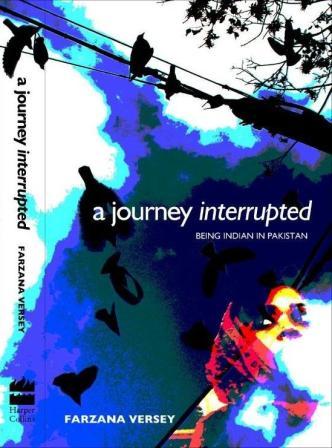
A Journey Interrupted: Being Indian in Pakistan
Author: Farzana Versey
Publisher: Harper Collins India
Price: 295 Indian rupees
Pages 279
Being a Muslim in India is a tough job. Threatened and terrorised by a growing number of Hindu militant extremists, and constantly looked at with suspicion and treated with a certain degree of caution, the Muslims are believed to harbour a certain desire to separate from the union and create a country of their own a la Pakistan, which a modernist Jinnah created but has since been usurped by the dubious Islamist agenda. The suspicion is so institutionalised that the Muslims are hardly represented in the country's million-plus armed forces.
This suspicion turns into contempt when an Indian Muslim travels to Pakistan. In the popular Pakistani imagination, India is a country of Hindus and if at all there are any Muslims, they are seen as infidels. Farzana Versey's encounters in Pakistan are replete with her confrontations with such stereotypes. However, as her expedition of exploration furthers, she finds fascinating contours of a human society with diametric contradictions where 'personal becomes political'. Reading her account in the book under review it seems that the Indian Muslims face more suspicion in Pakistan, because they are not treated on par with the Indian Hindus in the country that is supposedly Muslim.
In A Journey Interrupted: Being Indian in Pakistan, Farzana Versey weaves a collage of her experiences that she acquired during her four visits to Pakistan in six years -- a journey of exploration with continuous negotiations and constant reconciliation with her own identity of an Indian Muslim woman. "When I was on the soil of the land of the pure, my impurity struck me. I was the emotional mulatto," she writes. She travels through the cities of Karachi, Islamabad, Lahore and Peshawar and meets a vast array of people -- common tea-sellers, prostitutes, actors, poets and retired army men -- to find out strange and contrasting factors of the Pakistani identity, if at all there is one.
Despite dancing to the tunes of Bollywood films and replacing the peeling posters of bin Laden with the likes of Shah Rukh Khan, being anti-Indian is an important part of the Pakistani identity. Kashmir fits perfectly in that quest for a national narrative that has been interrupted by army dictatorships, political mismanagement and Islamist Jihadism. In order to sustain the rationale of a struggling identity, Farzana Versey writes, "every few years Pakistan writes a new fiction". The book is "about Pakistan, but it is also about India. It is about Them and Us, Her/Him and Me," she contends.
Though not a 'conventional' travelogue, A Journey Interrupted: Being Indian in Pakistan could not escape the trap of Kashmir -- the place that defines the 'convention' between India and Pakistan. "Kashmir was like a shadow tailing me," the author told this scribe. The reason is simple, she adds, "the Pakistani interest in India is centred on Kashmir. Not the Kashmiri people, mind you, but Kashmir as real estate, as a brownie point. And this will continue to be a hotbed, because the most important thing is that this one state keeps the armies of both countries occupied."
Farzana Versey terms the ongoing peace process "designer process", observing that "political peace is impossible and will never happen." She describes her observation as "freedom from delusion", but adds, "it would suffice if the ordinary people kept up a semblance of civility and left politicians out of the peace process. When you want to sup with your neighbour you do not seek the permission of the landlord, do you?" The book under review is written primarily from an Indian Muslim perspective, which subtly tries to debunk a few stereotypes that exist about both Pakistanis and the Indian Muslim 'affiliation', a cause to which both the Hindu militants in India and the Islamist extremists in Pakistan are wedded.
As India and Pakistan are trying to overcome the legacy of Partition and build new bridges, Farzana Versey -- while watching from the Pakistani side of border at Wagah -- feels unsettled by the "unsheathed anger and the charade of candle-lit peace", and finds proximity and not the distance "disturbing". A wonderfully written account, the author uses terse language in effective idiom, imagery and poetic observation. In these times of political and social unrest in Pakistan, this is a timely book -- one that delves into the Pakistani mind and traces the chasms in its recent history.
- Murtaza Shibli
25.6.08
Snippets from a few reviews

Despite its imperfections—a jerky, disjointed narrative and long passages of recorded history—this is an interesting book, made so by the searching questions she asks her protagonists and gets asked in return.
It reads like a heated debate, on theology, diplomacy, perceptions, the Muslim identity and radicalism, democracy and dictatorship and cultural cross currents.
Versey terms the CBMs as “designer peace” and concludes that real peace will never come: being anti-Indian is a crucial component of the Pakistan identity despite their obsession with Bollywood films and Indian television soaps.
She writes with anguish and pessimism, a journey into hearts of darkness with no light at the end of that distorted prism, mainly because as she astutely observes, “every few years Pakistan writes a new fiction” to keep the embers alive.
DNA
The trouble with A Journey Interrupted is that it is a difficult book to get through, largely because of the writer’s tendency to lapse into florid description. Pakistani dancer Sheema Kirmani, for instance, enters the pages “like a story waiting to be told.” Her exit is equally dramatic: “I left her alone. Her eyes flashed embers.” This is pretty much the tone for most of the book, and while it makes for good drama, it is exhausting to read at length, and makes the characters seem less real.
Versey is much better when she leavens all that intensity with some humour, as when she describes a TV actress repeatedly muffing her one-line dialogue (‘Nahin!’). Her reflections on the complex relationship between Indian Muslims and Pakistan and the questions her travels raised about her own faith and feelings for her country are interesting and almost painfully honest.
The Mail Today
WHAT makes an Indian woman undertake four trips to Pakistan in a span of six years? No, it wasn’t with a book in mind — Farzana Versey, the author of A Journey Interrupted, Being Indian In Pakistan , clarifies that at the outset. It also wasn’t “… to find herself,” as someone at a well- heeled party in Mumbai quipped when Versey was away in Pakistan. It’s only when one grows with the book does one realise that the trips could not be summed up in a single- line answer. The visits contained too much and revealed too much, both about India and Pakistan, to be summed up as a definite answer.
As you start with Versey on her quaint trips across the Radcliffe Line, you realise that Pakistan may be just next door, but it is one of the longest distances that an Indian can travel in a lifetime. The journey, once begun, becomes yours. And as an Indian reader, you also start realising what is India — after all, it’s only when our country is juxtaposed with Pakistan that we realise what makes us ‘ us’ and them, well, ‘ them.’
Versey recounts experiences of each of her trips with vivid details and they are enmeshed with vignettes about Pakistan, both from immediate past and even remote past. So, as you read along, you realise that you are peeling off layers from the present day face of the country and gradually understanding how its past since August 14, 1947 has shaped up its present. It may be old wine in new bottle for Pakistan observers who are as old as the two neighbours of the subcontinent, or maybe even older, but for those who came in too late to be affected fatally by the events of 1947, 1965 and even 1971, it is definitely an interesting read. For instance, in two pithy pages, she sums up the transformation of Zulfikar Ali Bhutto from being the man, “… who asked Yahya to arrest Mujib ( ur- Rehman, in East Pakistan). It was a matter of time, before he became the leader.” She ends the run on the topic with Zia- ul- Haq taking charge of the country and Bhutto being sentenced to death by a Lahore court. She writes, “ As the noose went around his neck and the world stood shaken, Brutus transformed into Caesar.”

The Book

The back-jacket blurb
'You need to be deported,' said the retired army general. What follows is not deportation but the beginning of an exploration. An exploration that is nuanced by the identity of the narrator: an Indian Muslim woman travelling alone in a space notoriously difficult to negotiate, vis-a-vis its history and politics.
From travelling in the cockpit of the PIA aircraft to having the door shut in her face by a born-again nationalist to attending parties in perfumed salons to examining the minorities; from being treated as a philistine to engaging in enlivening conversations with those who had to pay the price for dissent, the author attempts to understand what it means to live in Pakistan today.
In the course of her journey, at times interrupted, through the cities of Karachi, Islamabad, Lahore and Peshawar, Farzana Versey finds herself struggling with her own identity 'When I was on the soil of the land of the pure, my impurity struck me. I was the emotional mulatto,' she writes.
A Journey Interrupted is not your conventional travelogue. In the vignettes the author weaves together, of living and travelling in a complex society, the personal becomes the political. And the picture that emerges is of a changing nation with a unique mix of religious tradition and barely-in-check liberalism. In these times of political and social unrest in Pakistan, this is a timely book – one that delves into the Pakistani mind and traces the chasms in its recent history.
- - -
Contents
Acknowledgements
Prologue
The Indian Question – A Beginning
Section A: Cities, ruins, resurrection
1. Vestiges of Valhalla
2. Where phantoms walk
3. The haunted, the hunted
4. The First Frontier
Section B: Inside Outside
5. The Kafir Mussalman and the Confused Muslim
6. The Marginals
7. Changing faces, Static Masks
8. Dissent and Defence
9. Birth of a nationalist mullah
10. Soliloquists in a swarm
11. Falcons in the desert
Section C: The Pakistani Question
12. Jinnah to Jihad
13. Requiem
Epilogue
Subscribe to:
Posts (Atom)

